Jordan Walker
Jordan's never done "ordinary." With 15 years in hospitality including managing the floor at Manchester Arena, he's now the Director at ConnectIn Events, where he rips up the rulebook to create events people actually remember.
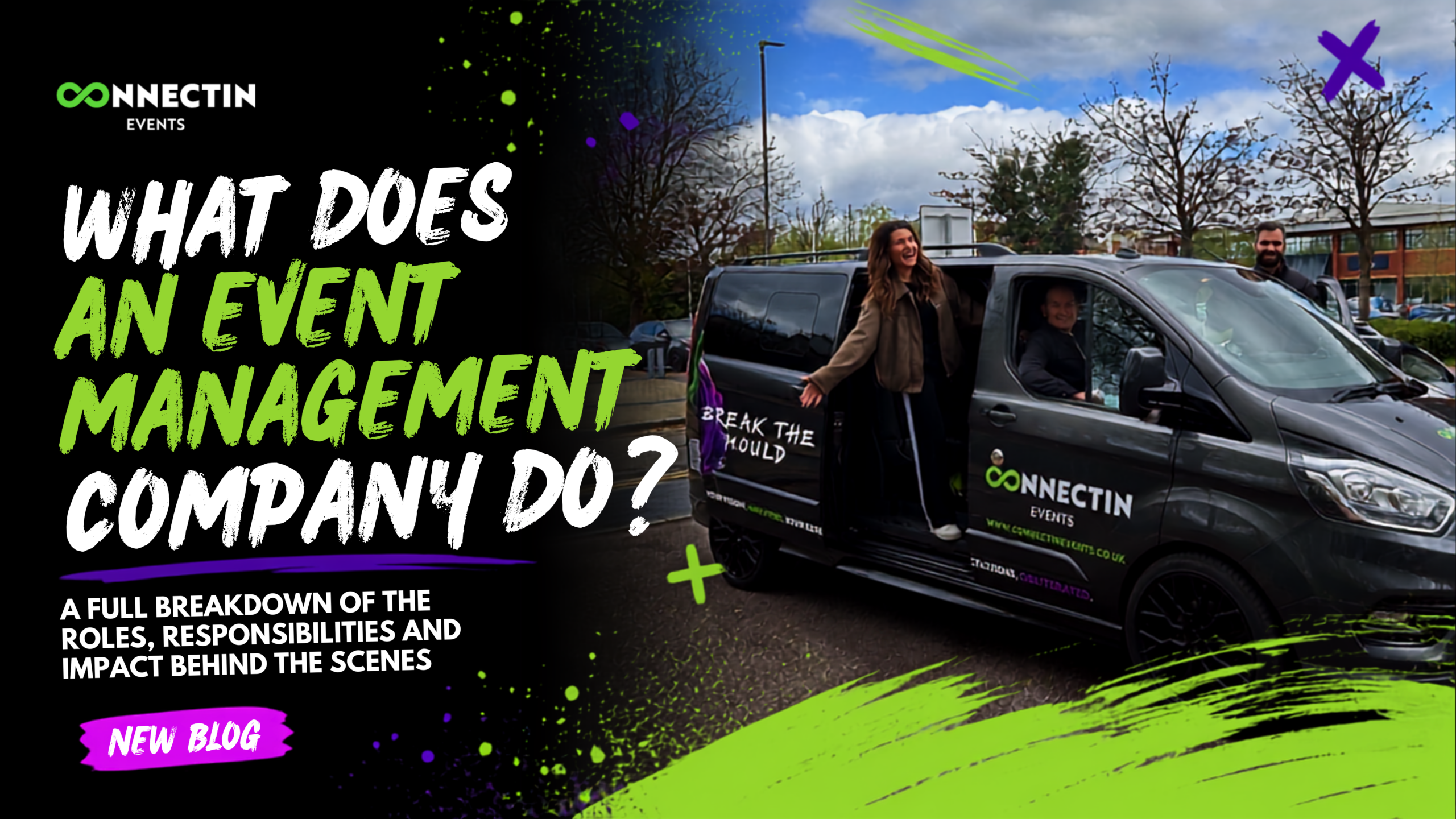
An event management company plans, organises and runs events on behalf of businesses, handling everything from the first idea and the budget through venue finding, suppliers, production and the delivery on the day. In short: you set the goal, they make it happen, and the stress of making it happen sits with them rather than your team. Here is a full breakdown of what that actually covers.
The short answer
A full-service event management company typically handles seven things: concept and planning, budgeting, venue finding, supplier management, production and design, on-the-day delivery, and the wrap-up afterwards. Some agencies only do a slice of this list, which is why it always pays to ask exactly what is included.
1. Concept, strategy and planning
It starts with the why. A good agency digs into what the event needs to achieve, whether that is rewarding a team, launching a product or impressing clients, and shapes the format, theme and running order around that goal. You get a plan, a timeline and a single point of contact who owns it.
2. Budgeting
The agency builds and manages the budget: allocating it across venue, catering, production and contingency, gathering quotes, and tracking spend so there are no surprises. If you want a sense of real numbers first, see our guide to how much a corporate event costs.
3. Venue finding
Agencies search, shortlist and negotiate venues on your behalf, often at better rates than you would get booking direct because they bring venues repeat business. At ConnectIn, venue finding is a free service covering the sourcing, the rate negotiation and the booking.
4. Supplier management
Caterers, entertainers, photographers, transport, security, furniture: a typical event involves a dozen or more suppliers, each with contracts, deadlines and quirks. The agency selects them, books them, coordinates them and chases them, so your inbox does not have to.
5. Production and design
This is the part most businesses cannot do in-house: staging, lighting, sound, screens, set design and theming, plus the technical crew to run it all. It is the difference between a room with a projector and an event people talk about. See our event production and event design services for what sits under this umbrella.
6. On-the-day delivery
On the day itself the agency runs the show: managing the schedule, the suppliers, the venue and the inevitable surprises, usually with a run sheet planned to the minute and a show caller keeping everything on time. You attend your own event as a guest, not as the person holding the clipboard.
7. The wrap-up
Afterwards comes the closedown: supplier payments, venue handback, feedback gathering and a debrief on what worked. The good agencies treat this as the start of the next event, not an afterthought.
What an event management company does not do
Worth being clear about the boundary. A good agency does not take your event away from you: the goals, the guest list, the brand and the big decisions stay yours. It also does not replace the internal knowledge of your business, which is why the best results come from a partnership: you own the why, the agency owns the how. If you are weighing up whether to build the capability internally instead, we have an honest comparison of in-house vs agency event management.
What types of events do they cover?
Almost anything a business runs: conferences, awards ceremonies, product launches, away days, summer and Christmas parties, charity events, outdoor events and virtual or hybrid formats. Most agencies have specialisms, so check their recent work matches your event type.
How do event management companies charge?
Usually one of three ways: a project fee for the whole event, a management fee as a percentage of the event budget, or day rates for smaller pieces of work. Whichever model, the mark of a good agency is transparency: a clear quote, a clear scope and no mystery extras. At ConnectIn we work to your budget from the first call and show you exactly where the money goes.
Thinking about hiring one?
If this is the year you hand the clipboard to someone else, two guides will help: how to choose an event management company and the cost guide above. Or skip ahead and talk to us about what you are planning: we are a full-service corporate event management team, born in Manchester and delivering across the UK.
Frequently asked questions
What is the difference between an event planner and an event management company?
An event planner typically handles the organising: venue, suppliers, schedule. An event management company covers the full picture, including the technical production, design and on-the-day crew. If your event needs staging, sound and lighting, you want management, not just planning.
Do event management companies only handle big events?
No. Most handle everything from intimate team days and dinners up to conferences with thousands of delegates. The service scales with the event, and so does the fee.
Will we lose control of our event?
No. You keep ownership of the goals, guest list, brand and budget. The agency delivers against your decisions and reports to you throughout. A good agency feels like an extension of your team.
How far in advance should we engage an event management company?
For large events, 6 to 9 months ahead gets the best venues and supplier availability. Smaller events can come together in weeks. Earlier is always cheaper and calmer, but a good agency can move fast when the date is tight.
Big event ahead?
Tell us the goal and the budget, and we will handle everything else. Get in touch with ConnectIn Events.
Share this post
Related posts